
Overview
Gaussian Splatting is a neural rendering technique for reconstructing scenes from posed images. Instead of dense voxels or a full neural field (e.g., NeRF), the scene is represented as a set of 3D Gaussians. Each Gaussian stores position, color, opacity, and a covariance that encodes local geometric shape. During rendering, Gaussians are projected to the screen as textured quads and blended using alpha compositing in screen space.
In this project, I implemented a WebGPU-based splat viewer that loads a .ply splat file and renders it in real time.
The pipeline has three main stages:
- Preprocess the Gaussian point cloud (color, covariance, opacity, quad size, NDC position), with simple frustum culling.
- Depth sort splats using a GPU radix sort implementation.
- Render screen-oriented quads and shade them with Gaussian falloff in the fragment shader, composited back-to-front.
For more information, see the original 3D Gaussian Splatting paper.
Point Clouds
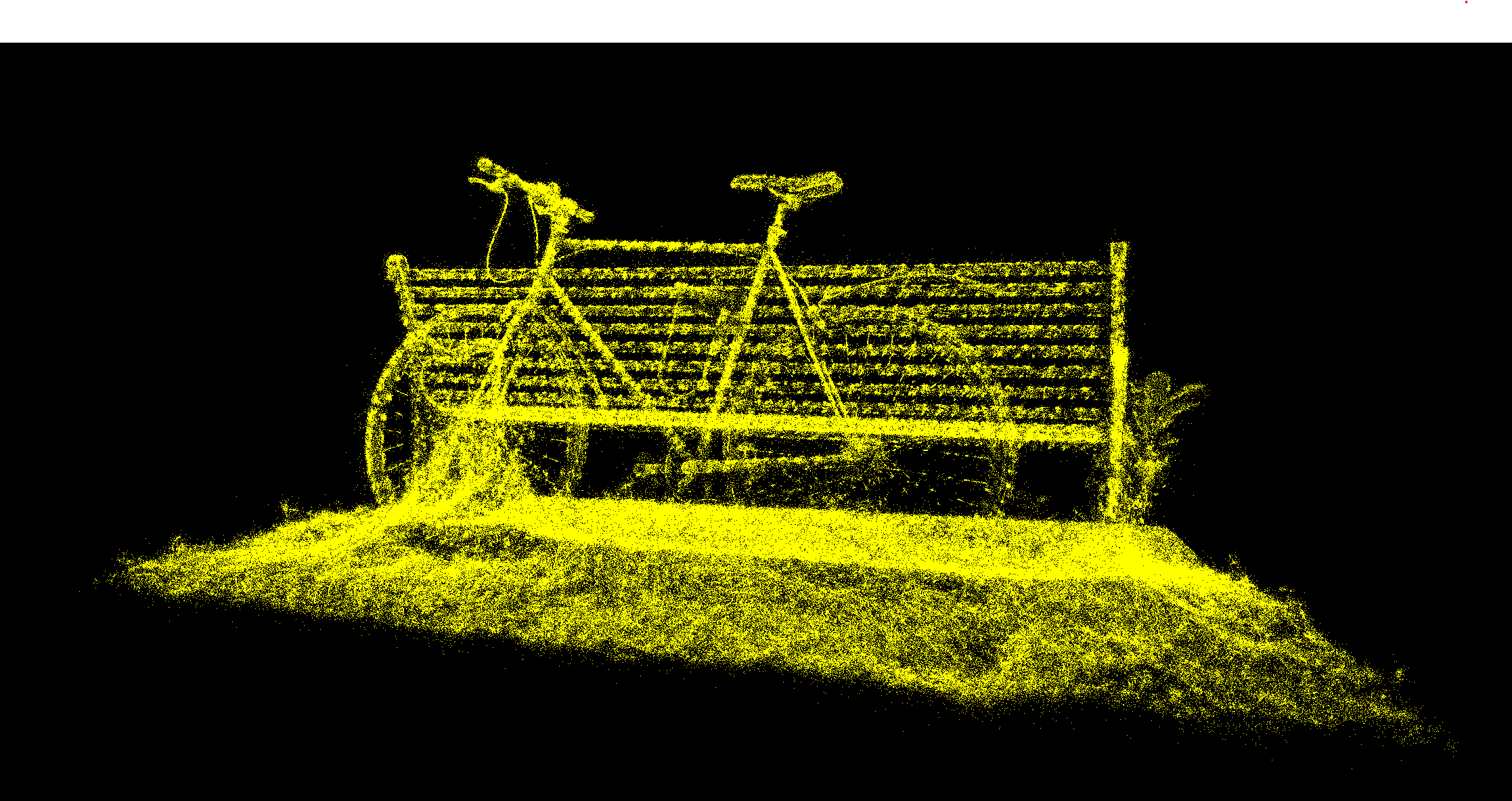
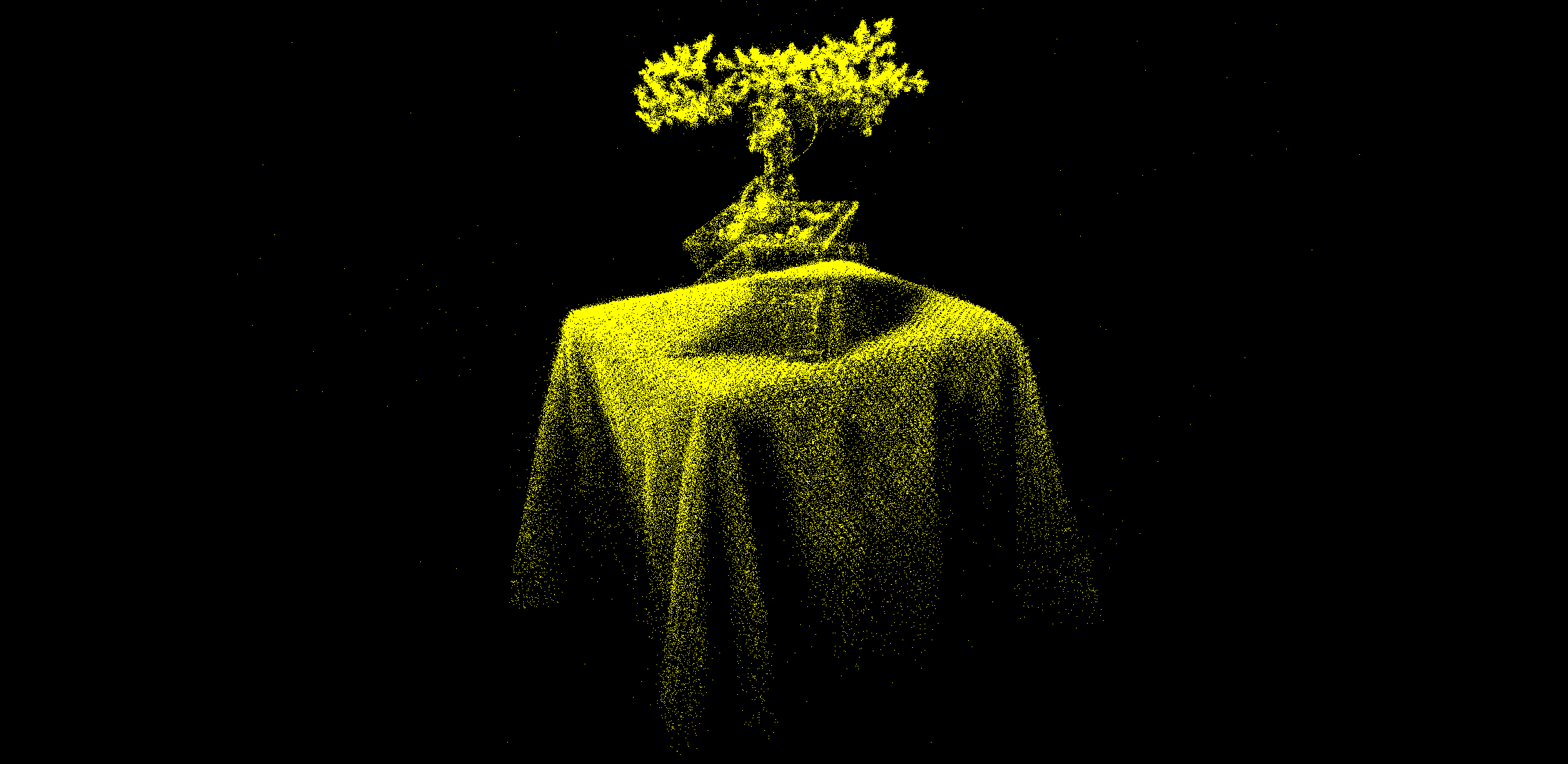
The input is a set of 3D points with attributes (e.g., color, normals). While this representation is sparse and discontinuous, it becomes visually dense once each point is rendered as a Gaussian splat.
Gaussian Splatting
Quads
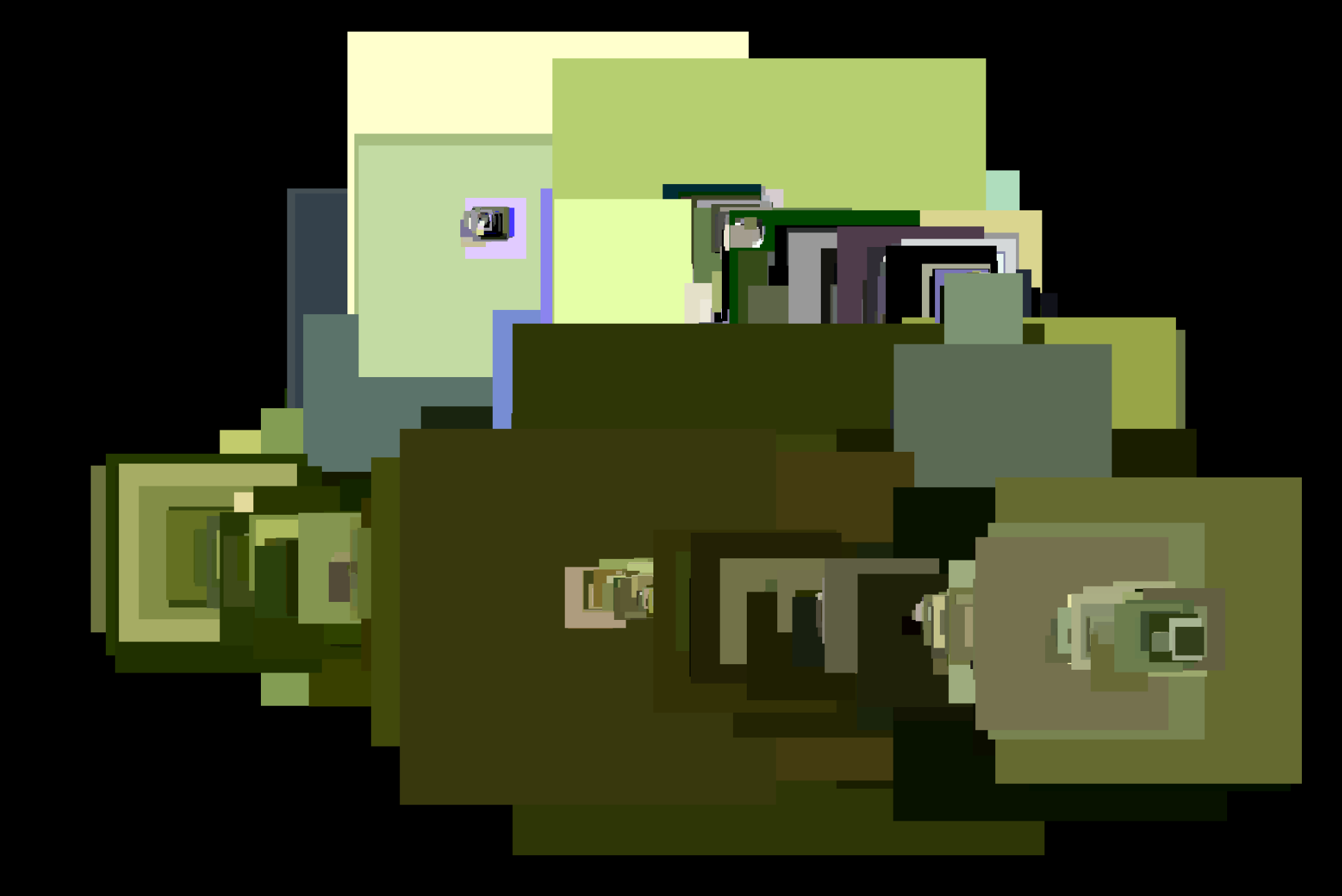
Each 3D Gaussian is projected to the screen and rendered as a screen-aligned quad whose size bounds the Gaussian’s projected ellipse. After projecting the Gaussian center to NDC, we compute a screen-space covariance and derive a 2×2 ellipse. The quad is chosen large enough to cover this ellipse so that the Gaussian falloff can be evaluated per-pixel in the fragment shader.
Colors and Covariance
Appearance
Instead of storing a fixed RGB value per splat, each splat stores spherical harmonic (SH) coefficients. At render time, the view direction selects an SH evaluation to produce view-dependent color.
Covariance
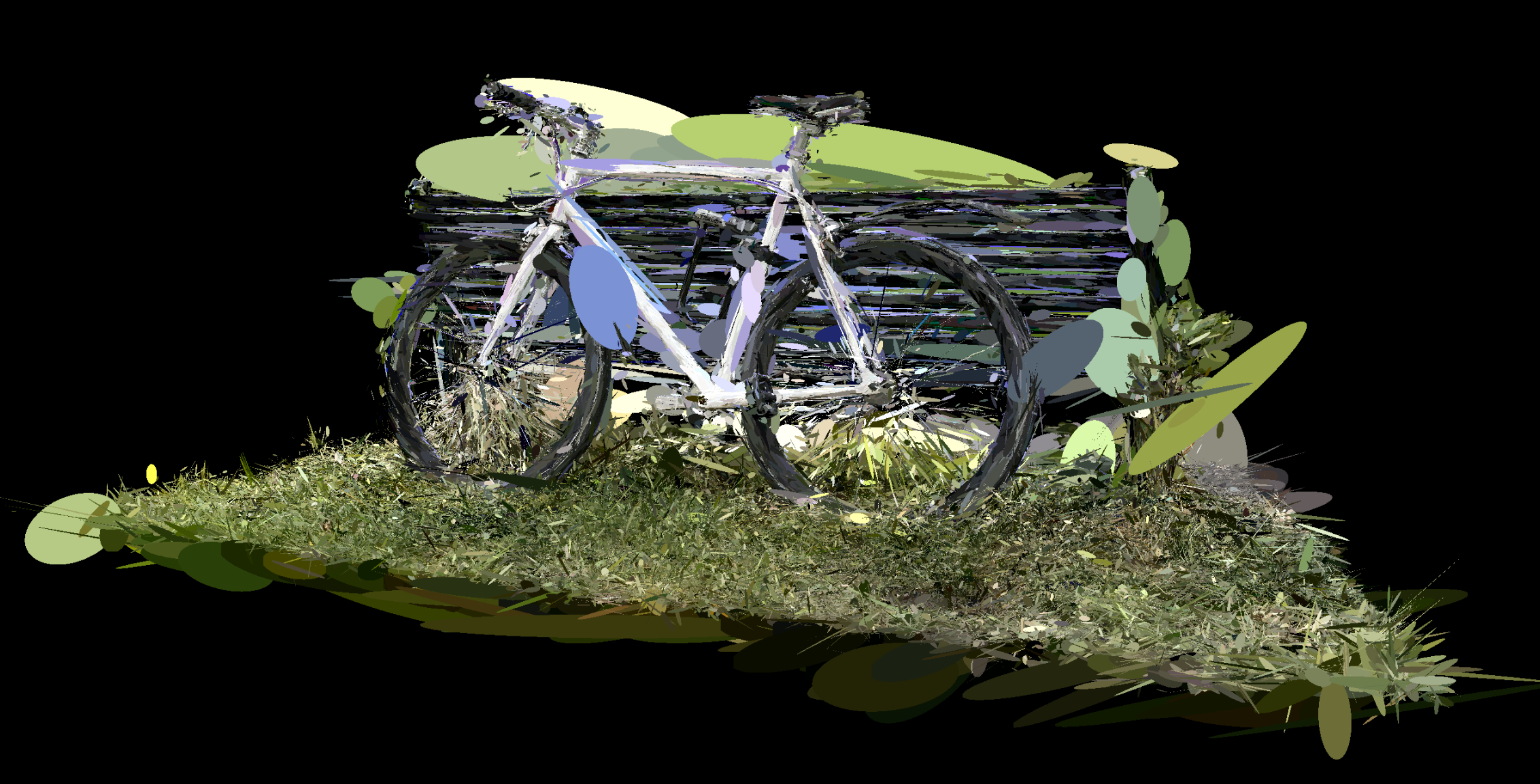
The covariance matrix encodes the anisotropic shape of the Gaussian ellipsoid in 3D. Before rasterization, the 3D covariance is transformed to a 2D covariance in screen space, which dictates the falloff profile across the quad. After preprocessing, splats are sorted back-to-front for correct alpha compositing.
Output

Credits
- Vite
- tweakpane
- stats.js
- wgpu-matrix
- Differential Gaussian Renderer
- 3D Gaussian Splatting paper
- Special thanks to: Shrek Shao (Google WebGPU team)